
The Indian government has introduced a bill to overhaul the civil nuclear sector, allowing private participation and establishing a new liability regime. The SHANTI Bill, 2025, aims to repeal existing acts and address industry concerns.

The winter session of Parliament is set to begin with the government prioritizing its reforms agenda, including a bill to open the civil nuclear sector to private players. The opposition is expected to raise concerns about electoral roll revisions and air pollution.

Government on Tuesday said radioactive material found among scrap in Mayapuri in West Delhi, which triggered panic early this month, apparently came from abroad.
Whether the ambitious targets are achievable is a moot question as India's earlier target was 20,000 MW of nuclear power by 2020.
India's nuclear regulator the Atomic Energy Regulator Board is carrying out a thorough review of the first unit of the much-delayed Kudankulam atomic power plant as directed by the Supreme Court last month. "We are reviewing the safety aspects of Unit 1 at Kudankulam as directed by the Supreme Court," an AERB official said
The Kudankulam Nuclear Power Plant suffers from lack of safety measures and is plagued by several other "serious issues". It must not be commissioned till they are resolved, anti-nuclear activists told the Supreme Court on Thursday. Appearing before a bench of Justices K S Radhakrishanan and Deepak Misra, they submitted that the safety measures recommended by the Atomic Energy Regulation Board have not been put in place.
The UN atomic watchdog sought more information from India about mishandling of radioactive material by Delhi University on Friday, as the country's nuclear regulator conducted inspections at the varsity campus.

'Bharat Small Reactors are essentially similar to the existing 220 MWe Pressurised Heavy Water Reactors. The existing regulations are applicable for BSRs.'

The PMK has now lent its voice to the protests against the mining of atomic minerals in Kanyakumari.

AAERB's permission for RAPP-7 paves the way for the subsequent phases of reactor commissioning leading to its commercial electricity generation.

While the capital spending is being maintained at 3.1 per cent of the GDP, a little more would have boosted economic growth even further, suggests Rajiv Memani.
Union minister Jitendra Singh assured the members of the Rajya Sabha on Thursday that there is better nuclear safety in India as compared to many other countries and there are enough safeguards in the Indian nuclear plants.
India's nuclear regulator on Friday said it has granted permission for loading of fuel into the much-delayed Kudankulam atomic power plant.
India's nuclear regulator has found no defects in the reactor pressure vessel of the Kudankulam atomic power plant, the Lok Sabha was informed on Wednesday.

Nehru's faith in science and technology, his genuine respect for Bhabha, and their burning ambition worked synergistically to place India on the nuclear map of the world. Atomic energy developed and prospered because of Nehru's vision fulfilled by Bhabha's mission, recalls K S Parthasarathy, former secretary of the Atomic Energy Regulatory Board, on the occasion of India's first prime minister's 119th birthday today.
The inputs collected from the victims by an Atomic Energy Regulatory Board scientist gave vital clues which helped to identify the source of Delhi's radioactive leak, points out Dr K S Parthasarathy, former secretary with the Board.
The country's nuclear regulator virtually junked the findings of an international advocacy group on high levels of radiation in Mayapuri scrap market in New Delhi. In a statement, the Atomic Energy Regulatory Board admitted there was some contamination in local spots but it could not pose any health detriment.

The Chernobyl nuclear power plant, which was taken over by Russian forces last month, has stopped transmitting data to the International Atomic Energy Agency (IAEA), the United Nations atomic watchdog has said, expressing deep concern for the staff working under Russian troops at the nuclear site in northern Ukraine.
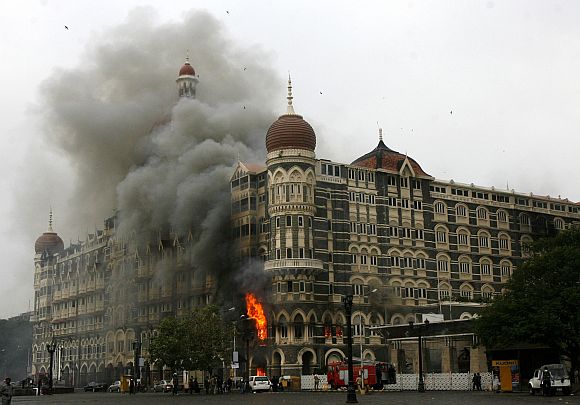
'Headley's testimony indicates to what extent the Pakistan government and its proxies can go to destroy not only Indian scientific talent but also international expertise.'

With the spectre of nuclear terrorism growing, the international community is concerned about the security of India's nuclear facilities. The worry has grown since 2010, when radioactive Cobalt-60 surfaced in a New Delhi scrapyard, killing one person and hospitalising eight others.
'Decisions on nuclear power have so far been taken by a small select group, primarily interested in profiteering from their actions, stating 'secrecy' as necessary from the national security point.' 'This argument is false, because we are dealing with the 'civilian' nuclear power sector, which is open even to the IAEA,' says Dr A Gopalakrishnan, former chairman of the Atomic Energy Regulatory Board.

India's nuclear establishment is continuing its march of folly at the expense of safety in the false belief that atomic power is the energy of the future. It's not. Nuclear power is in relentless global decline, says Praful Bidwai.

A radiation scare at Delhi's Indira Gandhi International Airport forced the suspension of cargo operations, but nuclear regulator and Delhi authorities said there was no leak of radioactive substance from a consignment unloaded from a Turkish Airlines plane.
'The leak is likely to continue for some time before it becomes stable, but this is something that NPCIL, who is the plant operator, will have to do. For this, we have to plan very carefully.'
The first two units of the Kudankulam nuclear plant will discharge 6.3 billion litres of waste water every day right onto the beach. This discharge will trigger a slow-motion disaster that will poison beaches, devastate near-shore fisheries and choke the livelihood of fisherfolk in the vicinity, says Nityanand Jayaraman.
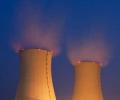
'When the cause of the leak is identified, is the AERB going to order a shutdown of all the other pressurised heavy water reactors in the country to fix the underlying problem?'

'Can we forgive the pathologist who wrongly labelled a healthy person as a diabetic patient for receiving the favour of the referring physician and possibly for a few thousand rupees?' 'The delinquent homeopath who caused a cataract in a child by giving terribly wrong drug must go to jail.' 'How can we permit a gynaecologist to practice her/his specialty if s/he tinkers with the faith of the patient in an abhorrent way?' 'Paying money does not guarantee good healthcare. The private healthcare system largely treats patients as revenue generators,' crusading doctor Dr Arun Gadre tells Dr K S Parthasarathy.

"I am an academic and I have always made it clear that my ultimate home is in the realm of ideas," Rajan said in a letter to staff.

'India-China economic ties are likely to take a hit in the wake of the new situation, but that also provides India with a new opportunity to strengthen its manufacturing base,' points out Dr Rajaram Panda.

Here's the full text of President Ram Nath Kovind's customary address to the joining sitting of Parliament on the first day of the budget session.
